Offers on selected pieces — up to 30% off Shop offers

TENON

Projects

From individual products to complete project packages.

The same factory, the same people and the same specification discipline, applied at project scale. We survey, draw, manufacture and install with our own team, and answer for the whole of it.

Case studies

Most joinery is ordered from a drawing. A large part of what we are actually asked to do on site is close a gap the drawing did not anticipate — a service panel left open to a finished space, a dead corner earning nothing, a finish that stops where two trades meet.

Case 1

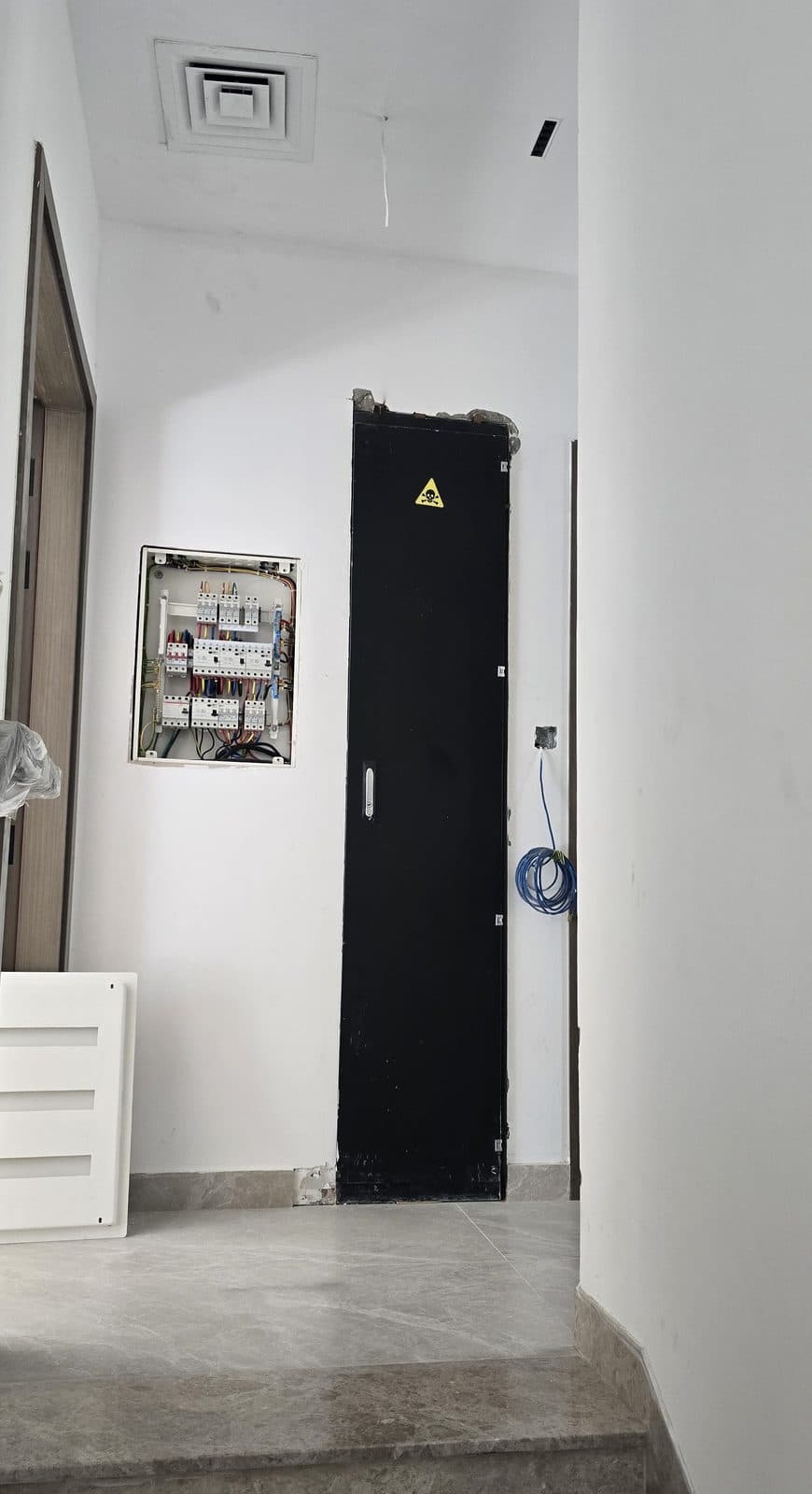
Exposed Distribution Board, Residential Corridor
  • Exposed Distribution Board, Residential Corridor — Before
    Before
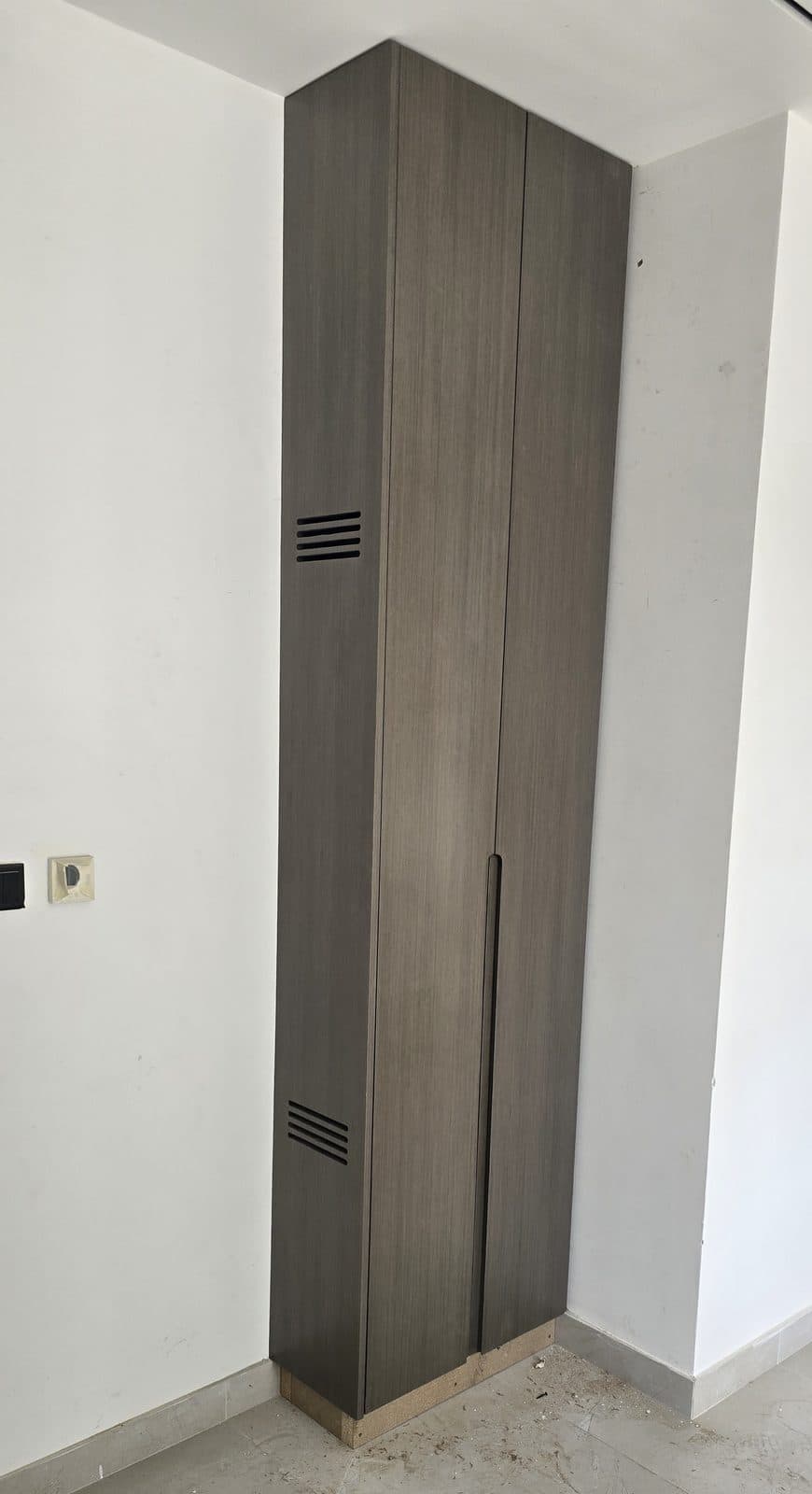
  • Exposed Distribution Board, Residential Corridor — After
    After

The problem

A main distribution board and an unfinished service door left open to a residential corridor. Live equipment sat within reach at head height, conduit and trunking ran across the wall, and the corridor finish broke completely at that point. Boxing it in solid was not an option - the board needs airflow and unobstructed access for maintenance and inspection.

The solution

A full-height enclosure built to the surveyed opening. Two shutters on concealed hinges give full-width access to the board, and recessed vertical handles keep the face flush against the wall line. Machined louvre slots at high and low level maintain passive airflow across the board. The unit is finished in the same melamine as the adjoining joinery, so the corridor now reads as one continuous surface.
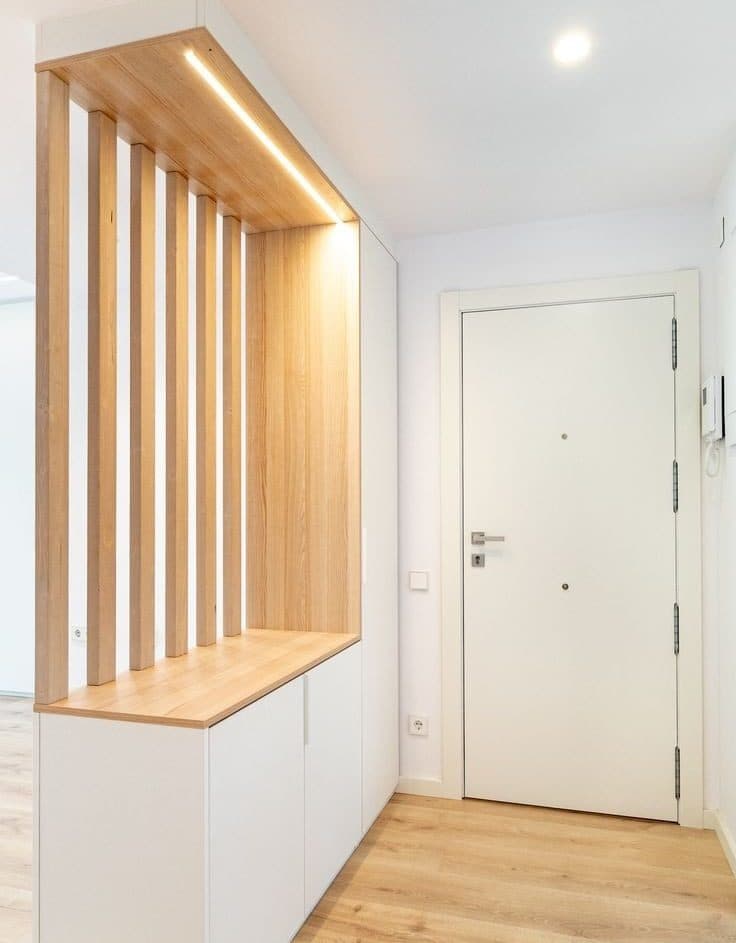
Case 2

Dead Corner Recovered as Storage

  • Dead Corner Recovered as Storage — Before
    Before

The problem

A recessed corner in a circulation route earned nothing. Any unit placed there risked reducing the clear width of the walkway below what the layout allowed.

The solution

A shallow full-height unit set into the recess itself rather than proud of it, so the clear walkway width is unchanged. Push-to-open fronts remove the handle projection entirely, and the carcass depth was set from the surveyed recess rather than a catalogue size.

Both cases were surveyed on site, drawn, produced in our factory and installed by our own team.